The market rose anyway
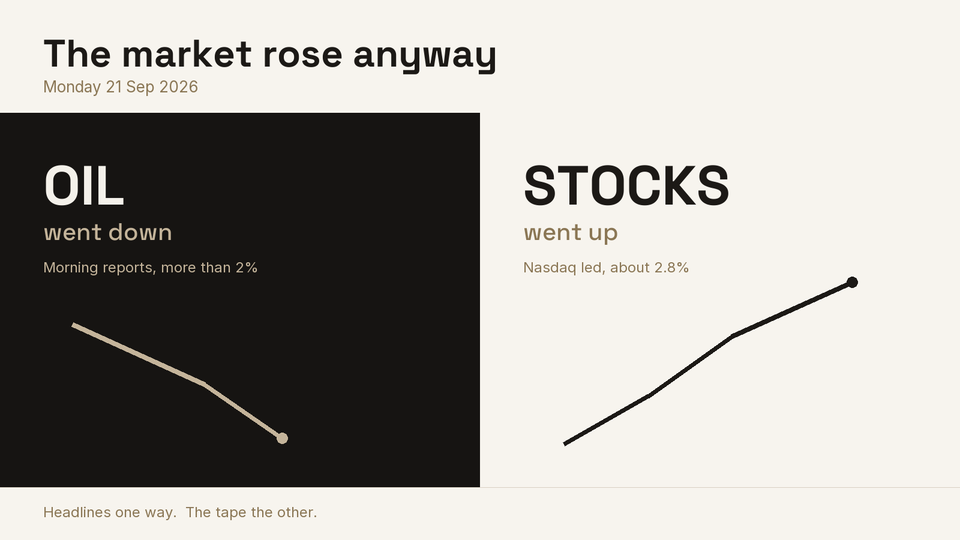
The headlines out of the Gulf got worse over the weekend. Oil went down. Stocks went up.
That is the odd fact of Monday. It is also the way this market has been acting since the Federal Reserve raised rates.
The loud day
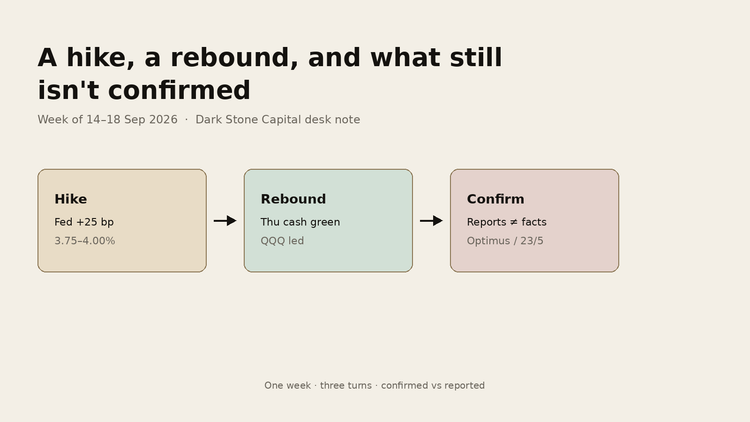
On Tuesday 16 September the Fed lifted its target range by a quarter point, to 3.75–4.00%. It was the first increase since 2023.
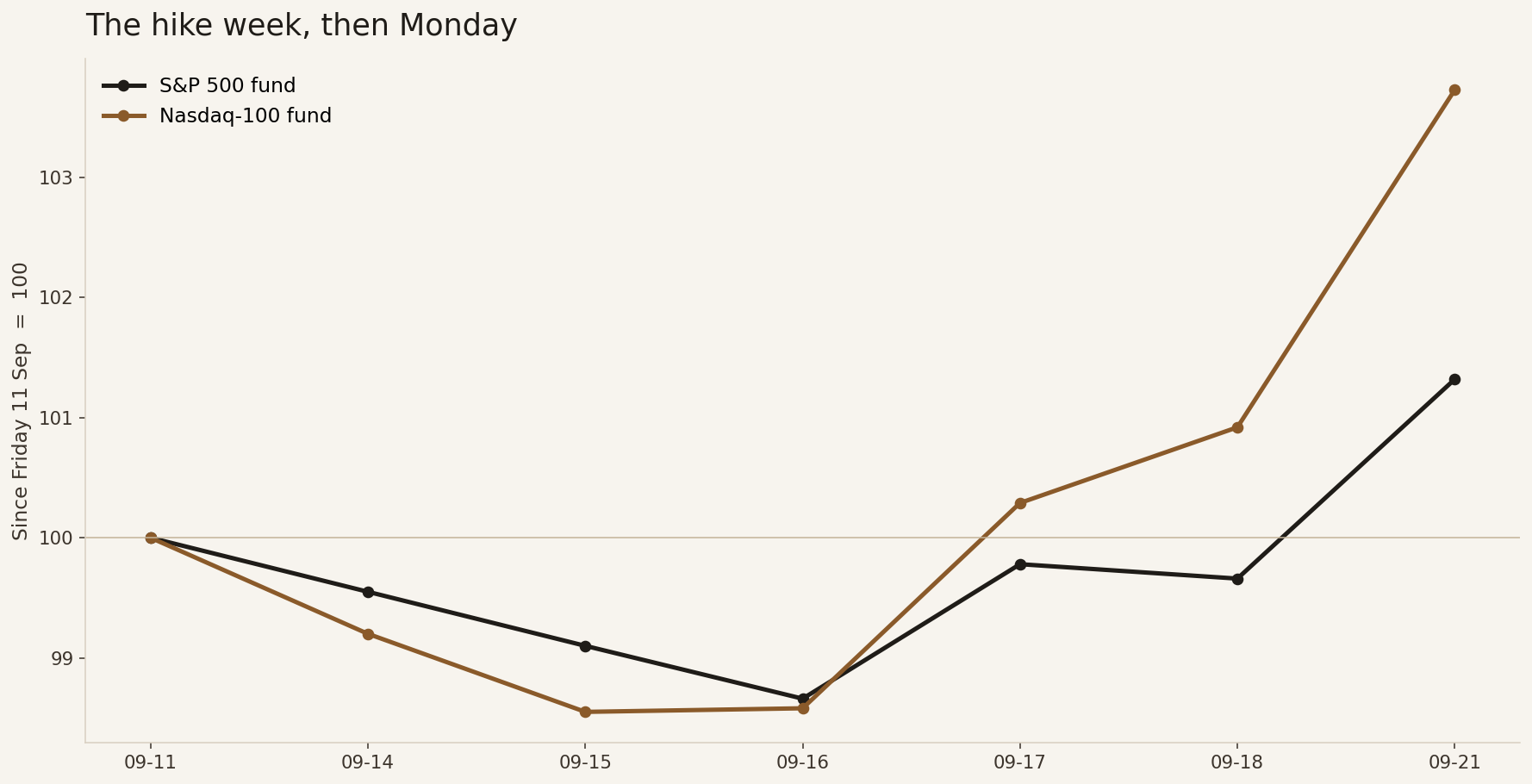
The week that followed was rough for the Dow. Published tallies put it down about 1.7%, the worst week since March. On our cash closes, the S&P fund finished that week slightly under the Friday before the hike. The Nasdaq fund finished slightly above it.
Then Monday came in with reports that Iran-backed Houthi forces had fired on Saudi Arabia, and with the White House still warning Tehran. Several morning reports had U.S. crude down more than 2% anyway.
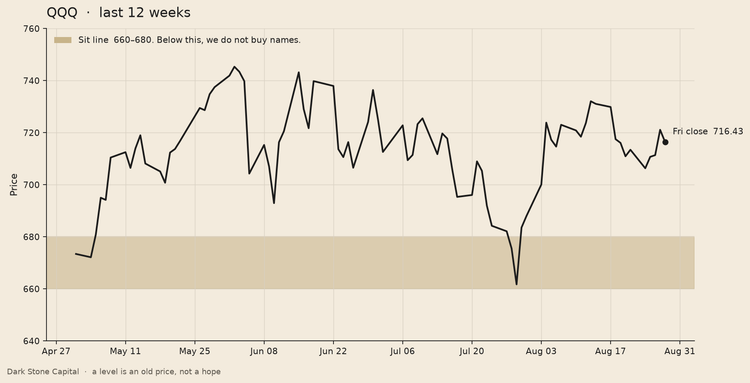
This note is stamped about 3:14 PM ET from the Gateway tape. A last at that hour is not the 4:00 cash close. At the stamp, the Nasdaq-100 fund was 741.53, about 2.8% above Friday’s cash close of 721.45. The S&P fund was 774.35, about 1.7% above Friday’s 761.69.
Since the Friday before the hike week, the Nasdaq fund is up about 3.7%. The S&P fund is up about 1.3%. Tech led the bounce. The broad market mostly got back what the hike week took.
Why oil can fall when the news gets worse
A lower oil price and a violent headline are allowed to land on the same morning. They are not the same fact.
Traders had a second story running. Bloomberg reported that oil shipments through the Strait of Hormuz were the highest in six months, and that the president had left the door open to a meeting with Iran’s president around the UN General Assembly. If more oil is moving, and if a meeting is even possible, the price can calm down before the news does.
That is not an all-clear. A meeting that has not happened is not a deal. A strait that needed naval escorts to reach a six-month high is not a quiet strait. The Fed’s trouble with this shock was never the headline. It was whether the oil price sticks in the inflation numbers.
Monday’s reports, using the CME FedWatch tool, still put the odds of another quarter-point hike at the late-October meeting near a coin flip. Chicago Fed President Austan Goolsbee said the case for higher rates was clear.
So the rally is easy to misread. Stocks rose because oil eased, and yields eased with it. Oil eased while the geopolitical story stayed open. Both of those can be true until a ship does not pass, or a jobs report, or a price report, says otherwise.
The companies that actually report this week
This is not an Apple week or an Nvidia week. The companies on the calendar, from a FactSet list carried by Dow Jones, are the ones that meet a household.
Tuesday is AutoZone before the open and KB Home after the close. One sells the parts people buy when they keep a car longer. The other sells new houses. Both are a read on whether a higher rate is changing an ordinary decision.
Wednesday is General Mills, Paychex, and Cintas, plus the first flash read on September factory and services activity, and the weekly oil-inventory numbers. Cereal, small-company payrolls, and work uniforms. Not glamorous. Closer to the ground than a chip stock.
Thursday morning is Darden, the company behind Olive Garden and LongHorn. Thursday afternoon is Costco. Costco also sells a great deal of gasoline. A crowded fuel line is not the same fact as a crowded aisle. Weekly jobless claims come out that same morning.
Fed Vice Chair Philip Jefferson speaks Tuesday. Governor Michael Barr speaks Wednesday. A leaders’ meeting between Washington and Beijing is on the reported calendar as well, with trade, AI, and Iran among the topics. Until the meeting happens, the date is a report, not an event.
What would change the story
The next few weeks are a sequence.
September 29 is job openings. September 30 is the Fed’s preferred inflation gauge. October 2 is the September jobs report. October 7 is the written account of the meeting that just hiked. October 13 is the morning JPMorgan has set for its results, and the morning on Wells Fargo’s calendar. The other large banks fall on the 13th and 14th. October 14 is consumer prices. October 28 is the Fed again.
The famous technology reports come after that. Public calendars currently bunch Alphabet, Microsoft, Meta, Tesla, Apple, and Amazon into the last week of October. Those dates are estimates until the companies confirm them. Nvidia is not in that bunch yet.
If oil stays down, the household reports hold up, and the jobs and price numbers do not heat up again, Monday will look like the start of a relief. If oil snaps back, or if Costco and the jobs report say the household is slipping, Monday will look like a one-day argument with the headlines.
The midterms are November 3. They matter. They are not what this week is about.
A print can move a price. It does not, by itself, tell you a business got better.

Member discussion