The week the pipes showed
How oil, yields, Asia, and the Nasdaq gate connected on 2 Sep 202
Several rooms, one plumbing system
On Wednesday the market did not feel like one number on one screen. It felt like several rooms sharing the same plumbing.
In one room, oil was rising because the United States and Iran were trading fresh strikes, and traders worried again about supply through the Middle East. Brent crude pushed into the mid-$90s. That is not a small move. When energy costs jump, people start pricing more inflation into the months ahead.
In the next room, bond yields were rising almost everywhere. Japan’s 10-year yield sat near 3%, a level it had not seen in decades. The U.S. 10-year poked near 4.8%. Yields in Britain and Europe climbed with them. Japan matters here because for a long time it was the cheap-money anchor of the global system. When that anchor lifts, money gets more expensive in a lot of places at once.
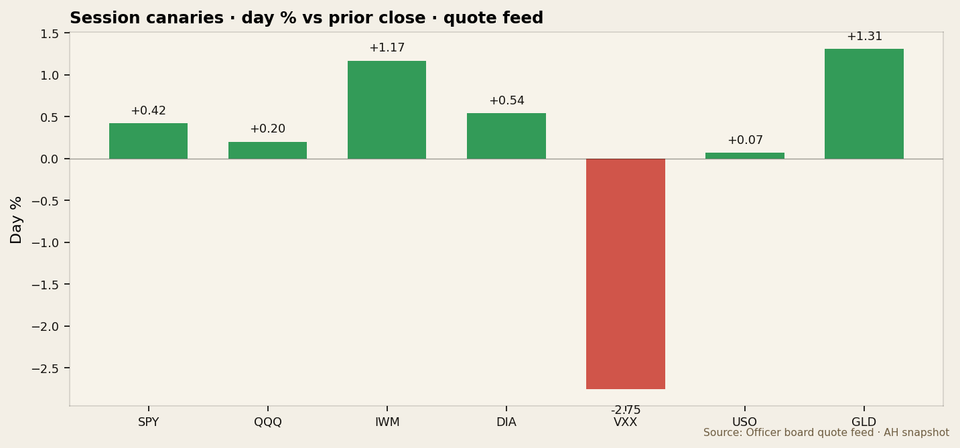
In the equity rooms, the pressure showed up first in Asia. Japan’s Nikkei and Korea’s KOSPI took the hardest hits — roughly three and four percent down in the selloff window. China, Hong Kong, Taiwan, and Australia were softer too. Europe fell, but not as hard. By the time the U.S. cash session had digested the scare, our live quote feed into the evening still had QQQ near 709 and SPY firm, with the fear gauge quieter than the overnight headlines suggested. That was not proof the scare was over. It was proof the U.S. afternoon could stabilize even while the rest of the world had already taken a punch.
That is the first lesson of the week: the same shock can land at different times in different places. Asia can warn. The U.S. can bounce. Overnight, the warning can come back.
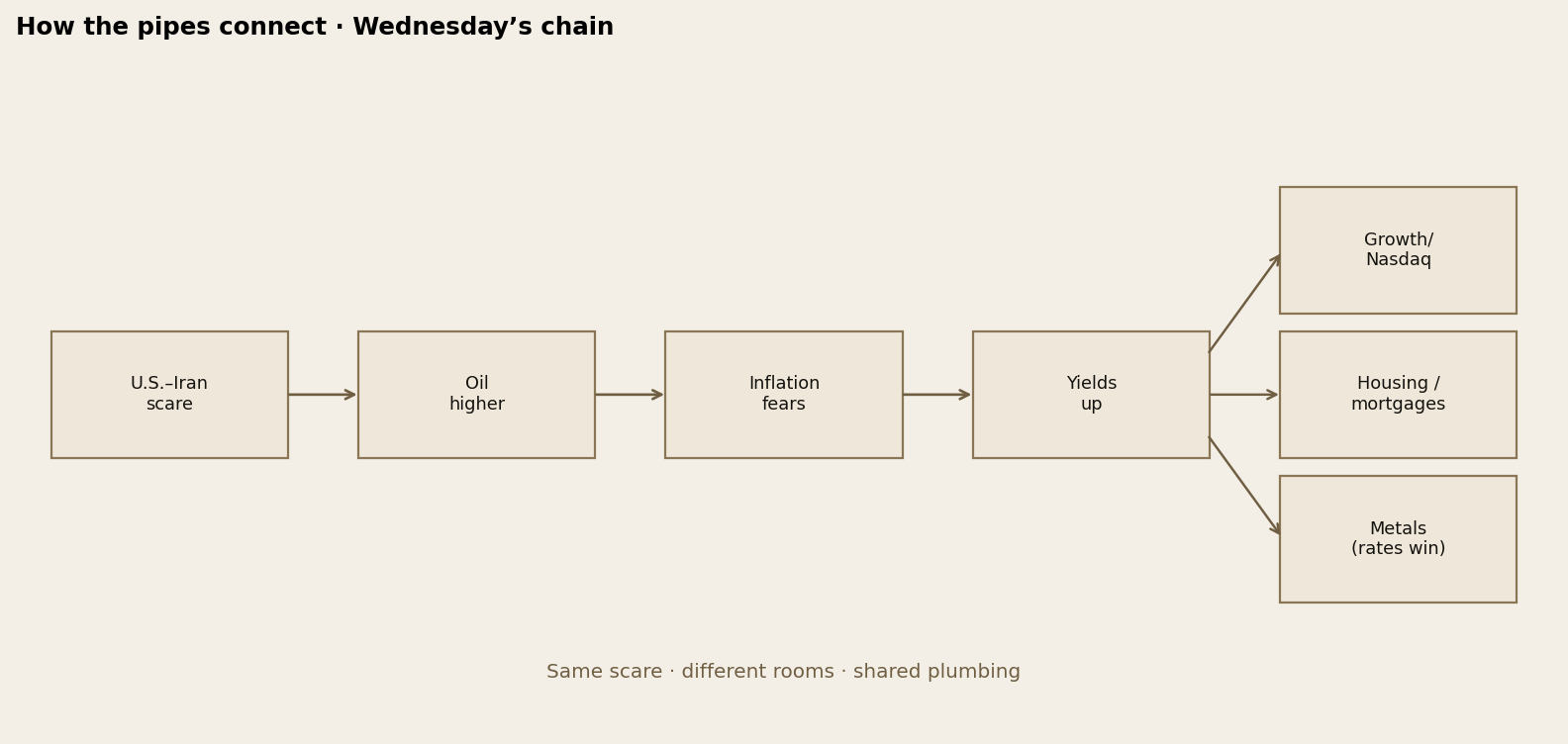
Figure 1. How the pipes connect — strikes → oil → inflation fears → yields → growth, housing, and metals.
What the U.S. quote feed showed that evening
Our Officer board is a live quote feed, not a story feed. Into Wednesday evening it still showed a calm U.S. digest after the global scare: QQQ a little green above 700, SPY firm, small caps holding up, oil quiet after the jump, and the fear gauge lower on the day.
That local print matters because it keeps us honest. Headlines can sound like the whole world is on fire. The tape may be telling a second story at the same time: the shock already hit Asia, and the U.S. session is trying to live with it.
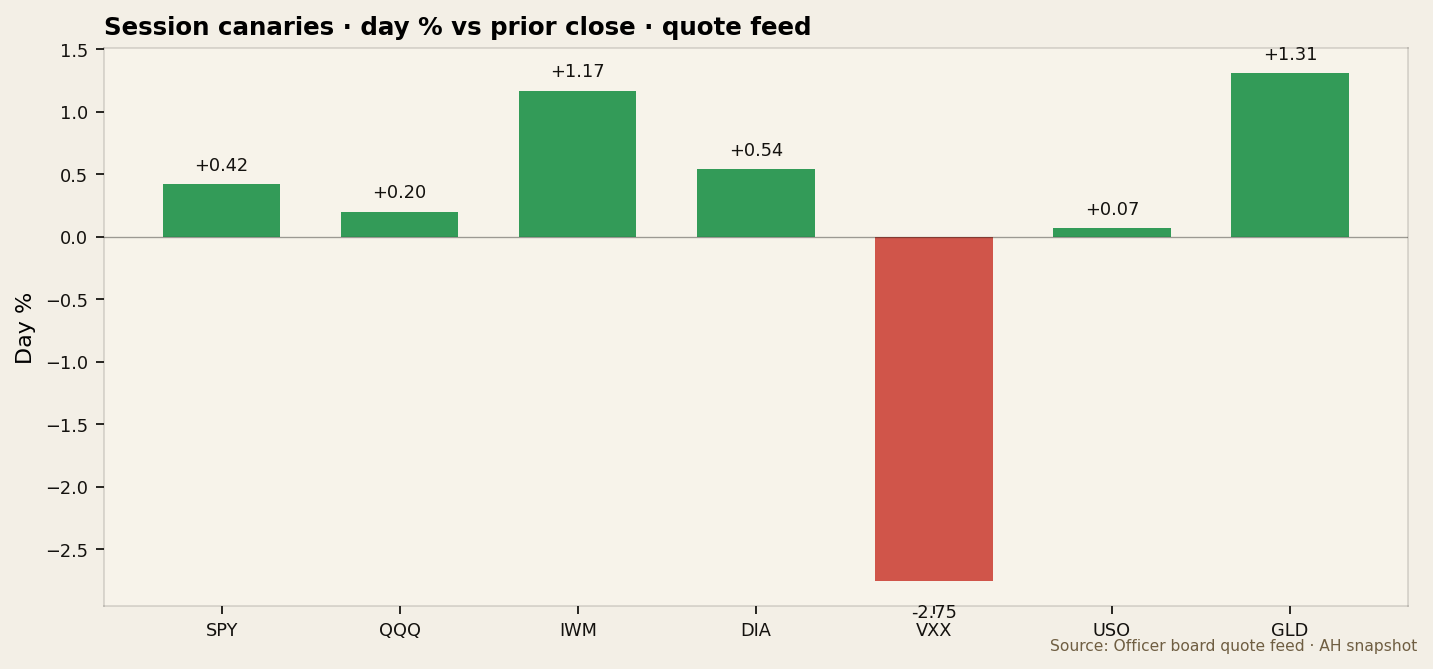
Figure 2. Session canaries — day % vs prior close from the live quote feed.
How those rooms are wired
Oil, yields, stocks, housing, metals, and tech are not separate hobbies. They are connected by a few simple links.
Start with geopolitics. When markets fear that Middle East supply could get disrupted, oil rises. Higher oil feeds inflation worries. Inflation worries push bond investors to demand higher yields for holding government debt. Higher yields then change the math for almost everything else.
Stocks feel it because a higher long-term rate makes future earnings worth less today. Growth companies — the kind that live on the Nasdaq — usually feel that first. That is why a yield spike often shows up in semiconductors and mega-cap tech before it shows up in a grocery stock.
Housing feels it because mortgage rates follow the bond market, just more slowly. Freddie Mac’s latest weekly reading already had the 30-year mortgage near 6.66%. Pending home sales have been softening, and more sellers are cutting asking prices. A fresh jump in the 10-year does not help buyers. Housing is the slow twin of the bond market. It does not crash on a Wednesday headline the way a stock index can, but it tightens when rates stay high.
Metals tell a less obvious story. A lot of people expect gold and silver to jump whenever war headlines hit. This week they often did the opposite. Spot gold was pressured around the $4,300 area. Silver slipped toward the mid-$60s. Higher yields give investors a reason to hold bonds instead of metals that pay no interest, and a firmer dollar makes dollar-priced metals harder for the rest of the world to buy. Fear alone is not enough. The rate pipe still matters.
So the wiring looks like this: strikes lift oil; oil lifts inflation fears; inflation fears lift yields; yields lean on growth stocks and keep housing expensive; metals can fall even in a scary week if rates are the louder signal. Once you see that chain, the day stops looking random.
The Nasdaq gate still comes first
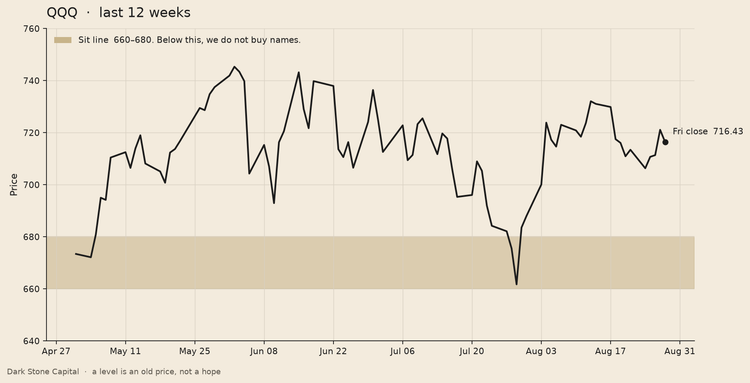
Dark Stone does not trade “the world.” We trade a short list of U.S. names, and we start with QQQ as the gate. If the big growth market is falling apart, buying one stock on the list is usually a bad idea. If QQQ is holding above a shelf we already marked, the list is allowed to work — that still does not mean we chase.
Right now the written QQQ shelf is 700 to 705. Wednesday’s tape stayed above that lid. Into the evening the last was still near 709. Call on the gate: watch, do not chase. The global scare raises overnight gap risk. It does not hand us a new buy box above the lid.
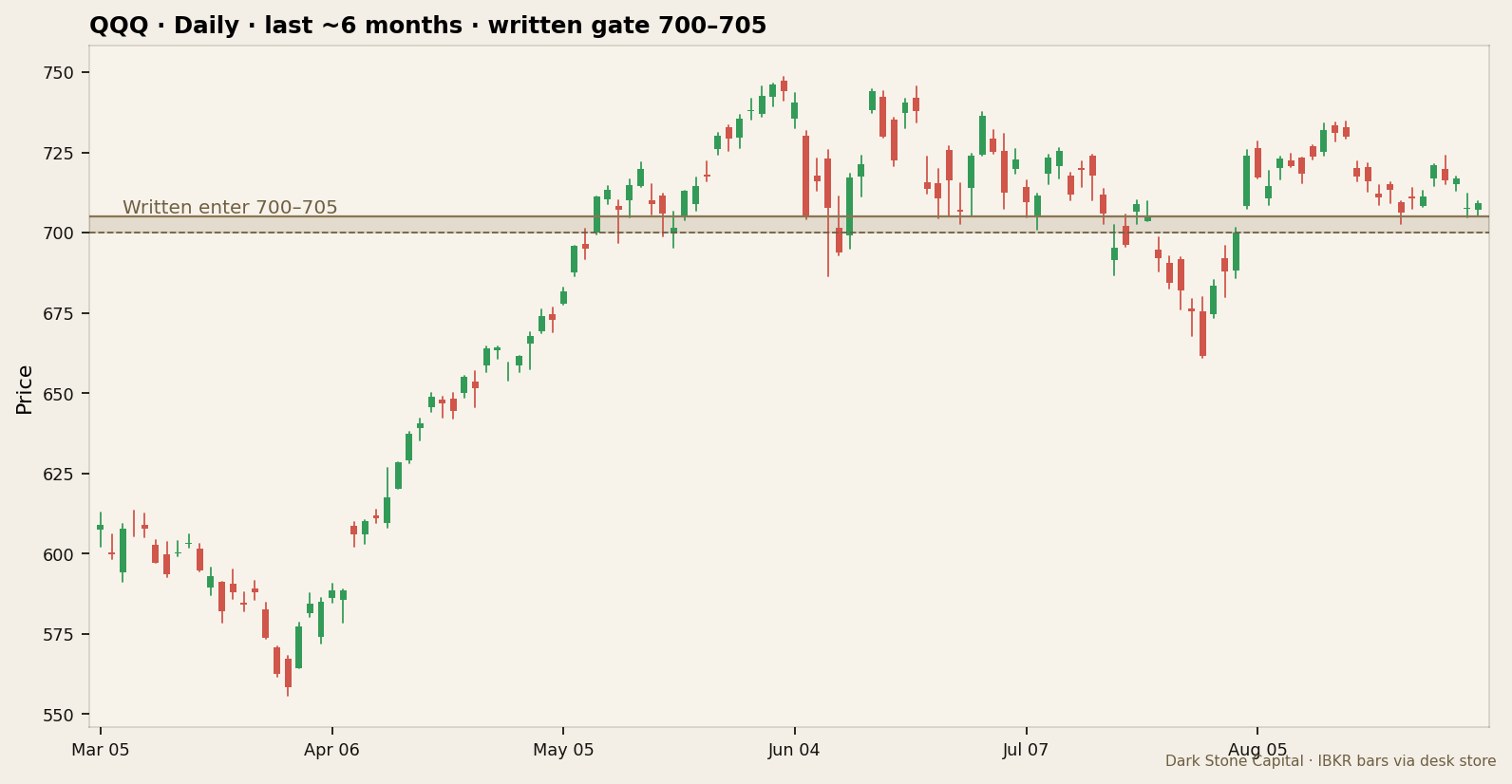
Figure 3. QQQ daily with the written 700–705 gate. Noise above the shelf is not a fill inside it.
What it means for the stocks we watch
Inside the list, the global connections show up differently by name. The watchlist itself was split on Wednesday’s quote feed — leaders and laggards in the same “tech” bucket. That split is the point. One headline does not move every name the same way.
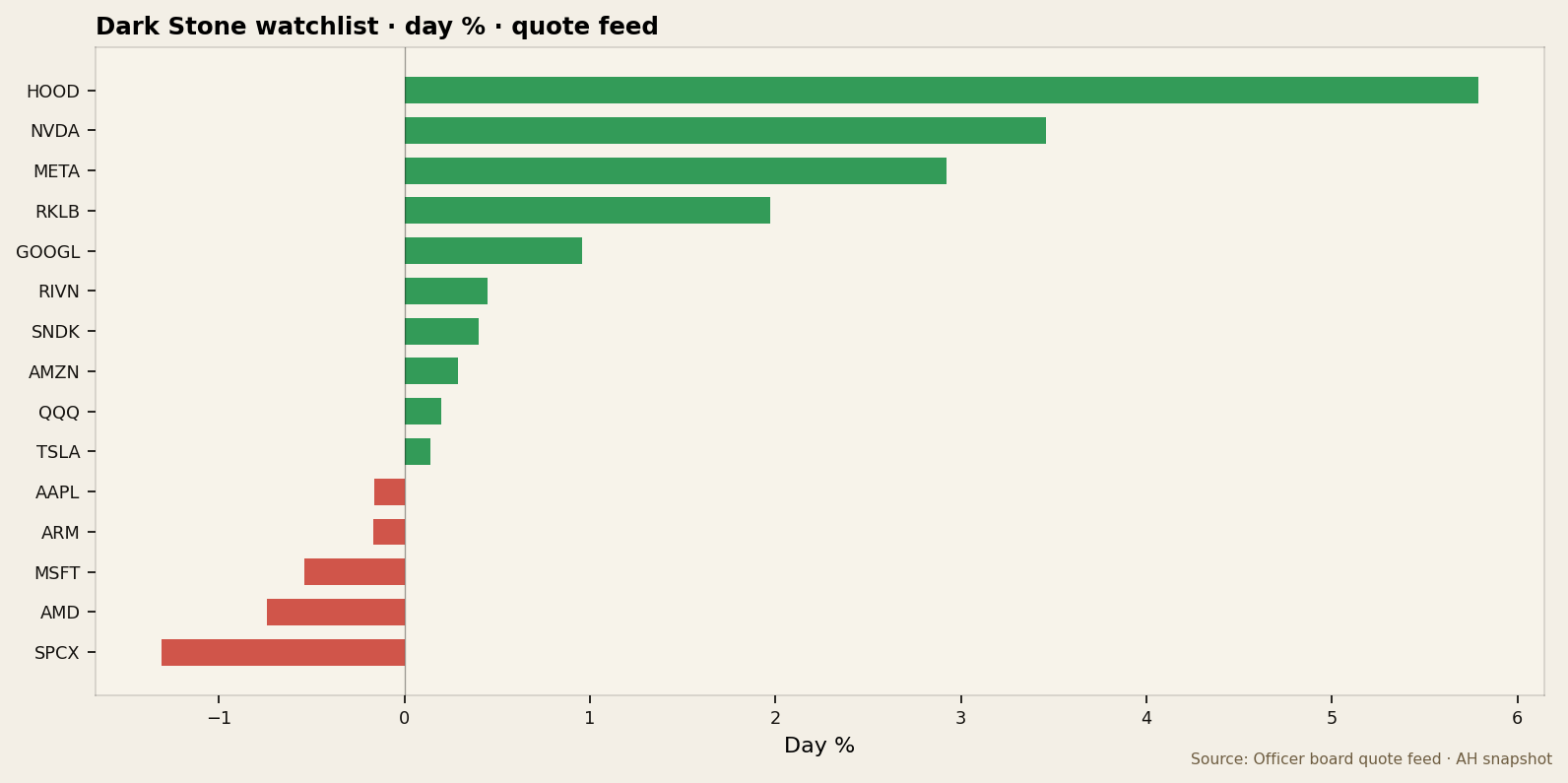
Figure 4. Dark Stone watchlist — day % from the live quote feed.
Alphabet (GOOGL)
Alphabet is the clearest live example of our method this week. We already marked 330 to 340 as the cheap area. The desk filled near 340. First supply is still 378 to 384, with a longer work-out toward 390 to 400 if the tape really changes. Out is 330. A noisy global day does not invent a better entry at 338. Sitting the written idea is the work, as long as 330 holds.
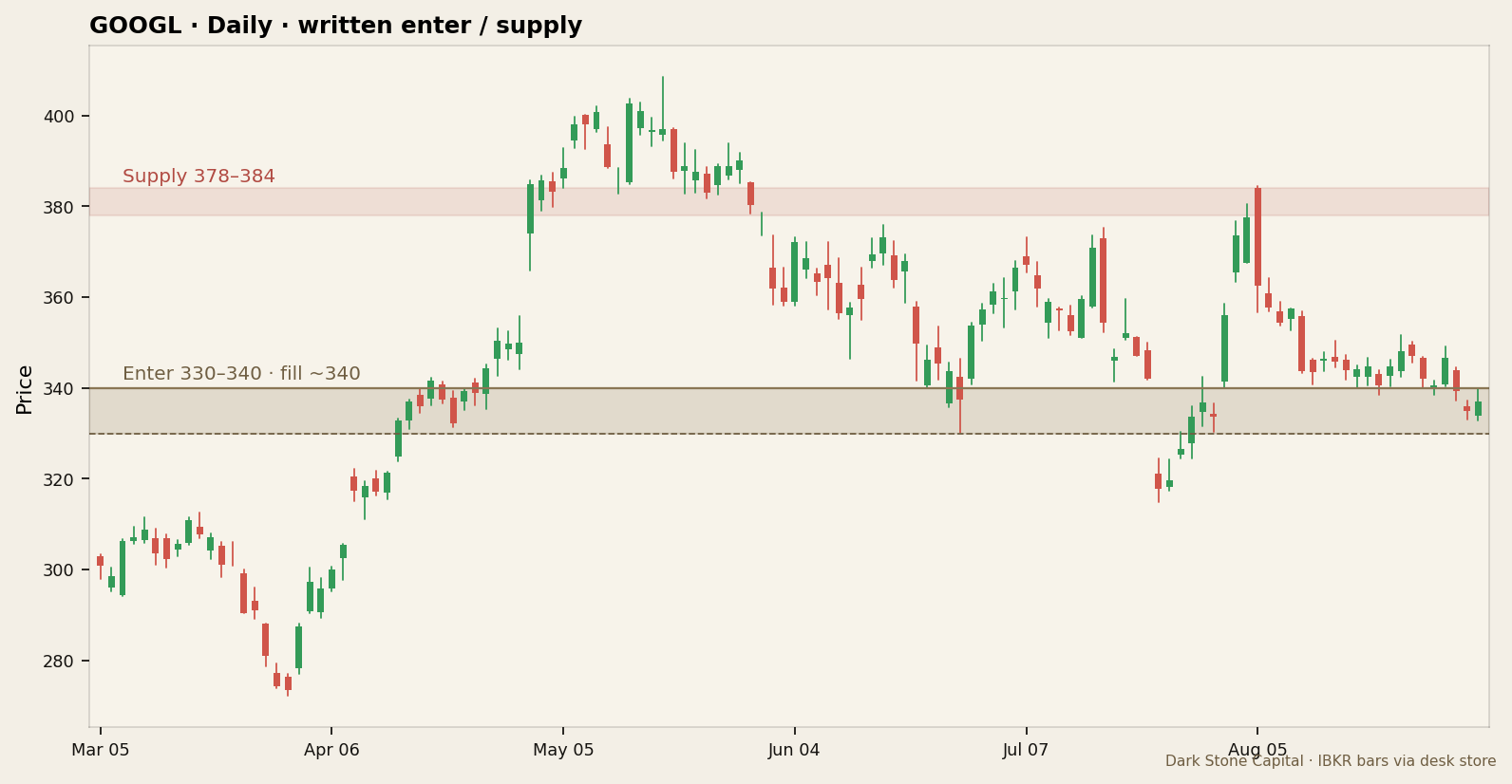
Figure 5. GOOGL daily with enter 330–340 and supply 378–384. The scare is context. The boxes are the trade.
Nvidia, AMD, and ARM
These sit closest to the Asia and yields shock. When Korea and Japan sell hard, semiconductor supply chains and sentiment often feel it next. Higher yields also lean on chip valuations. These names can still belong on a cash-swing list, but this kind of week is when you respect the overnight tape instead of forcing a dip buy you never wrote down.
Microsoft, Amazon, Meta, and Apple
This is the mega-cap growth complex that lives or dies with the rate math and the AI spend story at the same time. Research still frames enormous cloud and AI infrastructure spending over the next few years. That long story did not disappear on Wednesday. What changed is the discount rate. When the 10-year jumps, investors ask harder questions about whether the spending still pays. Split tape is normal when the theme is strong and the rate pipe is loud.
Tesla, Robinhood, aerospace names, and SanDisk
Tesla remains a long-duration, high-attention name — yield shocks and risk-off Asia sessions can hit it fast. Robinhood can run hard on risk-on days inside a messy week; occupancy of a written box is still the trade. Rocket Lab and SpaceX-related names live farther out on the risk curve and often become overnight weather when oil and yields dominate. SanDisk sits near the same semiconductor weather as Nvidia and AMD.
And QQQ itself is still the roster’s regime name. It is not a mascot. It is the first page of the book. Global yields and oil explain why the gate got noisy. They do not replace the gate.
Tech is two stories at once
Near term, higher yields lean on duration. Semiconductors felt that in the global risk-off window. Long term, the AI buildout story is still huge. That theme did not die on Wednesday. What changed is the math. When money is more expensive, investors ask harder questions about whether the spend still pays. Both can be true at the same time: theme versus rate.
How to hold the week in your head
By Wednesday night, the honest picture looked like this.
The world was dealing with an energy scare and a bond selloff at the same time. Asia took the first mark lower. Europe followed more gently. The U.S. afternoon stabilized enough that our quote feed showed QQQ still above 700 to 705, with fear not exploding into the evening. Housing stayed stuck in a high-mortgage world. Metals showed that rates can overpower a simple safe-haven script. Tech stayed split between a powerful AI buildout story and a harder valuation math.
For our desk, that all funnels into one habit. We do not start with a story about Iran, or Japan, or AI. We start with QQQ and the prices we already marked on the list. The global tape tells us why those prices are getting tested. It does not give us permission to buy the middle of a range because the news feels big.
Friday’s U.S. jobs report is the next shared switch. Soft or hot labor data can move yields, the dollar, and Nasdaq together. Until then, the map stays the map: watch the QQQ shelf at 700 to 705, sit Alphabet’s written idea above 330, and let the names on the list come to levels we already wrote — or stay in cash.
The pipes were easy to see this week. Oil into yields into stocks into housing into the names we actually trade. Once you see the wiring, the noise gets quieter.